02/03/2026
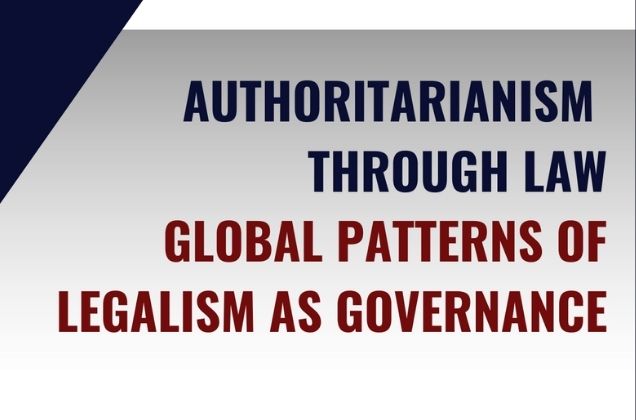
On February 24, 2026, the Sabancı University Istanbul Policy Center (IPC) brought together academics and students at a panel titled “Authoritarianism Through Law: Global Patterns of Legalism as Governance” held at Minerva Han. The event, which opened a discussion on how law is positioned in contemporary political systems within an interdisciplinary framework, addressed current global developments from an academic perspective.
The opening speech and moderation of the panel were conducted by IPC Director Senem Aydın-Düzgit. Aydın-Düzgit addressed the increasing academic interest in the relationship between law and political power, offering a framework for discussions on how lawmaking processes and institutional arrangements can transform the political sphere.
IPC Senior Scholar Alper Kaliber presented the IPC research note titled “Political Engineering Through Law: Hungary and Beyond”. In the research note, Kaliber addressed the dynamics of transformation observed in political systems through constitutional amendments, institutional restructuring, and legal regulations. Focusing on the Hungarian example, the study offered a comparative perspective on how such legal tools can be evaluated within a broader global context.
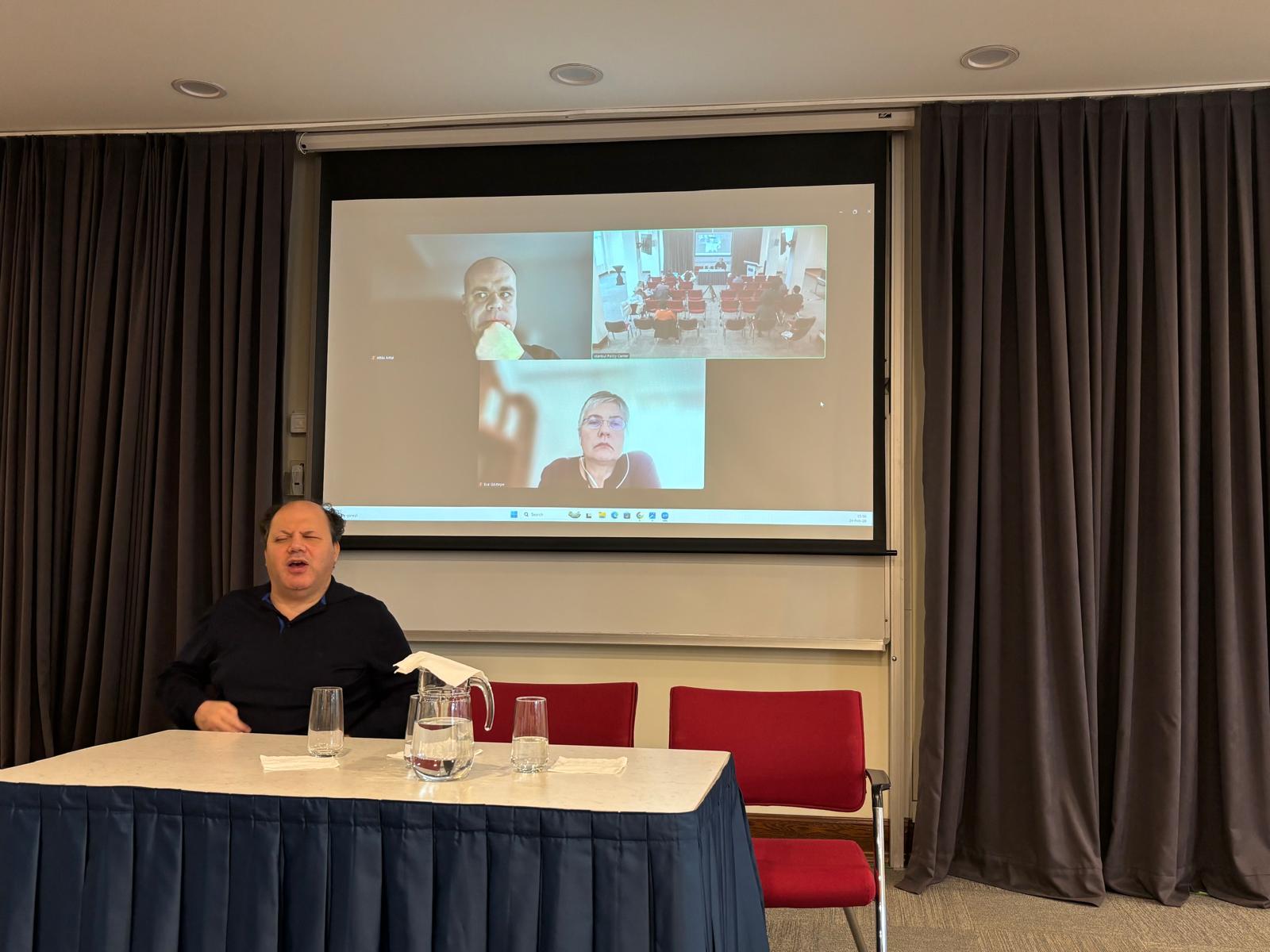
Ayşe Kadıoğlu, a faculty member at Sabancı University's Faculty of Social Sciences, contributed as a discussant, proposing a conceptual framework for the relationship between legal mechanisms and political transformation, and highlighting the importance of considering institutional design and societal dynamics together.
In the second part of the panel, Ece Göztepe, a faculty member at Bilkent University, made a presentation titled “Chaos and Uncertainty as a Strategy of Authoritarianism,” evaluating the impact of uncertainties arising in legal and political spheres on institutional structures and public opinion. Focusing on the role of constant change and unpredictability within governance practices, the presentation revealed that the relationship between law and politics is not limited solely to normative regulations.
In his presentation titled “Authoritarian Law in Hungary,” Attila Antal from Eötvös Loránd University addressed the interaction between political leadership and legal structures using the Hungarian example. Focusing on how this relationship between political leadership and legal structures is shaped at the institutional level, Antal examined how legislative processes and institutional arrangements intersect in the formation of governance practices. Antal emphasized the importance of evaluating these developments in both national and international contexts.
The panel concluded with a question-and-answer session. The event provided a current and comparative discussion platform on the role of law in governance, contributing to the academic dialogue on the subject.
You can watch the entire panel discussion here.